


Delta Health Reduces Service Costs While Improving Uptime With Block Imaging
See how Delta Health extended the life of its equipment and saved nearly $1 million with a custom Block Imaging Service contract.
The Status Quo Wasn’t Working
When Pat Sanders, Materials Manager at Delta Health, started to look for ways to cut costs at his small community hospital in rural Colorado, he quickly ran into a familiar challenge:
As healthcare costs continued to rise, Delta needed to reduce expenses while continuing to serve its aging population, who relied on the hospital for critical diagnoses and care. The challenge was doing so without sacrificing service quality or undermining its bottom line.
“We don't have a lot of patient volume that can keep paying us, but yet our expenses are still here to have the service. Healthcare has changed a lot. You can't compete without the service, but you can't keep the service if you don't have the volume to pay for the service.
So we have to cut somewhere. And that's what my job — to find a better deal without sacrificing the service and support that we continually need,” says Pat.
Unfortunately, Delta’s manufacturer-provided service was often slow, expensive, and inflexible, costing Delta resources and patients’ precious time. “Because we're rural, I think a lower priority on a lot of companies' service list,” says Kevin Fischer, Delta Health's Director of Radiology.
“I've had service guys didn't know what [downtime] meant,” says Kevin. “It means the difference between sometimes life and death.
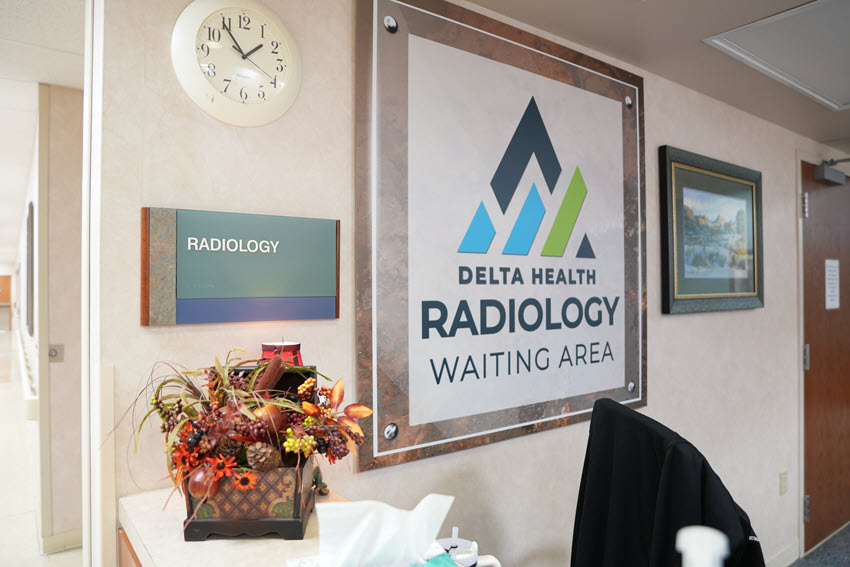
Downtime with no backup
Despite being a smaller hospital, Delta’s downtime is just as critical, if not more so than a large, regional hospital, as Kevin, explains: “We only have one MRI – we don’t have five… if one's down, we're down, if our nuclear med camera goes down, that department's down.”
Delta’s existing service contracts were inflexible and slow-moving, which was a death knell for Delta’s departments that had no redundancy. Delta felt like they were constantly losing a week of patient care time as they waited days for the engineers to arrive at the hospital, troubleshoot, order parts, and fix the machine.
“Unfortunately, we have companies that either they were difficult to reach, or if we did reach them, we never got a timely phone call back. They didn't come prepared so they could walk through the door with parts that might actually be able to get us back up and running."
And the worst part is, many of those patients who had already been waiting for weeks to get that scan now needed to be informed that their scan was being moved.
“Those are the hardest phone calls in the world to make,” said Kevin. "There’s no way [other service providers] were ever going to feel our urgency. It just becomes a piece of equipment. I guarantee you, to me, that's not a piece of equipment. That's a lifeline. I could tell you there's a lot of partners out there that don't understand that.”
For Kevin, Delta can only be as good as its service provider. If Delta can’t provide timely imaging services, people cannot access the unit and receive the critical diagnoses they need.
Stuck in the upgrade trap
Delta also knew that their existing 10–15-year-old systems could continue to run well, but their service providers wouldn’t figure out a way work with them. Instead, they kept pushing upgrades that Delta couldn’t afford by making it more difficult to service the older equipment.
“They knew they had us. The only way to get out of increasing the service agreement was to up a new lease or buy new equipment. And it was always a sales pitch, and it was always leveraging you into buying something new or paying an increased service cost because, of course, they don't support [your old equipment] anymore,” says Pat.
Delta’s hands were tied. Their providers told them they couldn’t keep supporting Delta’s aging systems without expanding the service equipment, but there wasn’t any alternative that wouldn’t stretch Delta’s budget more than it already was.
“There was just no opportunity to shop around and even see if what they were telling was the truth,” explains Pat.
And so, Delta Health faced two pressures:
First, they were not confident their service providers would rally to get them back up and running.
And second, they needed to keep their older systems performing longer, without spending more on new equipment.
In order to continue to serve their community well and plan responsibly for the future, Delta needed a service partner that made quick service a priority, had flexible contracts, and treated them like a true partner.
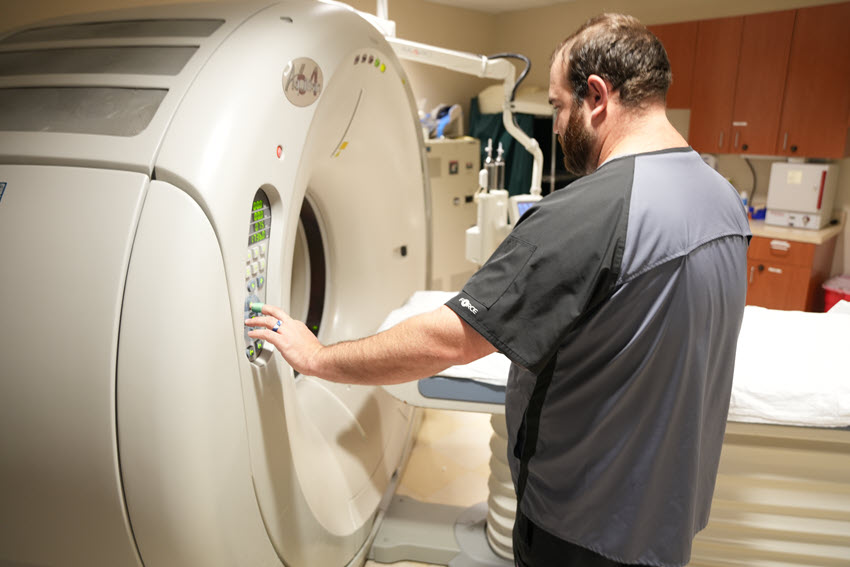
A different kind of service contract
To finally get control over their system’s longevity and know that they would be supported in doing so, Delta considered Block Imaging for a custom, flexible service contract.
From Kevin’s standpoint, the only way he could make sure that systems were back up and running and the experience was better for patients, was to “find a true service partner that made it more than service. They really had to make it personal.”
1. Saving big on parts costs
Days after speaking with Block, one of Delta’s CTs had a tube failure. Since it was an older machine, the manufacturer told Pat there was only one tube available for purchase, and it was going to be expensive.
Pat turned around and called Block, who had a better solution in thirty minutes: “And the parts guy called me, and he says, we can get three of them to you overnight. And the cost was 20% of what the manufacturer was quoting us.”
This experience of the Time & Materials contract gave Delta a picture of what it could expect if it worked with Block in the future.
2. Extending the life of existing equipment
One of the most common problems for Delta was in figuring out how to keep its older equipment working. Having engineers who knew how to maintain a system’s life past its “end of life” would be a huge advantage for their equipment.
With Block, Delta’s older systems have been able to be serviced and well-maintained for longer than Delta had originally expected.
“When it was done, we had a new machine that was supposed to be dead, and we've just had great luck with it ever since. It wasn't supposed to be supported, and it is ten years past its life, but it's still doing a better job for us today than it was two years ago,” Kevin says.
3. Sharing knowledge and building trust
Service like that sounded too good to be true at first, but once Delta had experienced the speed and helpfulness of Block’s engineers on the scene, they started to wonder how they could get more of their systems this kind of help. They began plans to sign on more systems once their service agreements were up for renewal.
From then on, the risk in giving up the familiarity of the manufacturer service vendors was proved worth it. “It is uncomfortable at first, but knowing that our service was stepped up and was so personalized was, was so valuable to us that that,” says Pat Sanders.
Getting Delta all the facts on the ground they needed built trust. Pat says, “Block was giving us information that wouldn't always benefit them so much, just giving us honest information to make a good decision for us.”
Regaining Control of Their Future
Using Block has reaffirmed to Delta that their problems won’t be relegated to endless back-and-forth. Pat Sanders verified this by calling every Block department he found a number for to see how they talk to customers.
It has also given Delta back control of the longevity and health of its equipment.
“Block has opened up so many doors and so many different options to keep our equipment running and has given us the opportunity to buy new equipment rather than being forced to lease or make payments,” says Pat.
As a result, Delta is excited to expand the systems it has on contract with Block as it waits for the other service contracts to come up for renewal.
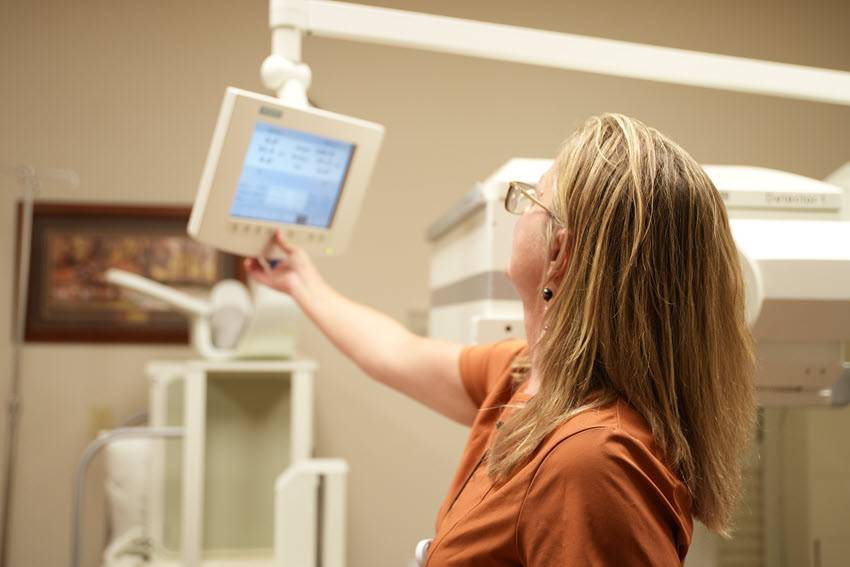
Delta Can Count On Block Imaging
Each of Delta’s systems under contract with Block are now backed by a plan that fits the hospital’s needs. Delta is confidently planning for the future with a service partner it can trust.
“To call all those lines and always get a human was very valuable to us because when something goes down, we need answers now. It's so hard to call a patient and say, ‘Sorry, we cannot serve you,’ because our one and only job here is to serve those people.”
“Before we ever signed anything with Block, we were searching for these parts and these repairs that we really felt like we were being taken advantage of. Block was like, whatever you need, and not only whatever you need, but we can be there overnight,” Kevin says.
If Delta needs a solution for one of their systems, they are confident that Block will take their uptime seriously while finding ways to save money and keep its aging systems going strong. Access to Block’s 40,000+ parts and national network of engineers, systems that were waiting for weeks for fixes can be taken care of in days.
Delta can now focus on providing life-changing care instead of constantly worrying that its service providers were extracting as much as they could from their partnership.
“If you really dug into it and started doing the math, there's a million dollars out there that's come to this facility through savings."
“Saving money doesn't always mean you're giving something up,” says Pat, “Lots of times just stepping out there, you may get something more.”